
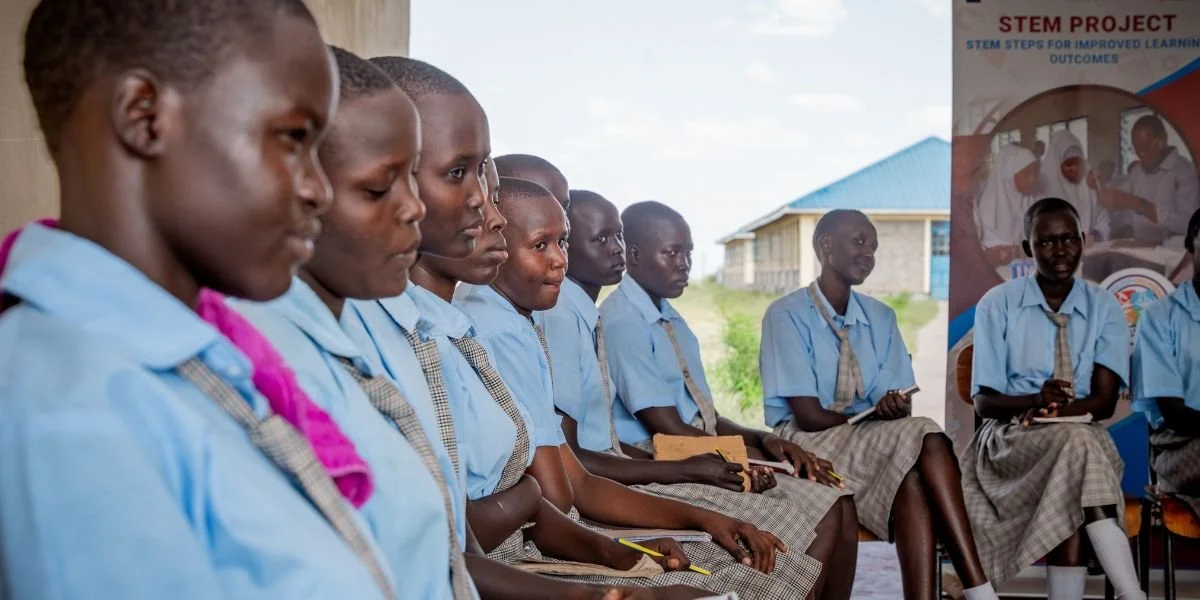
Millions of refugees suffer from interrupted education due to living in a transitory state after fleeing their homes. As a core partner of the UNHCR in refugee camps and host settlements across East Africa, Windle International facilitates education through full-scale management of schools, often including the construction, hiring and training of teachers, and curriculum creation and delivery. We aim to provide the highest quality education so that all students are able to continue their educational journey despite their refugee status.
Secondary Education
The refugee Secondary Education Programme in Dadaab Refugee Camp is implemented directly by WIK and funded by UNHCR supports 4,214 learners (2,626 male, 1,588 female)
Secondary education interventions in Dadaab, Kakuma and Nairobi funded by UNHCR, UNICEF, and ECHO and overseen by WIK. These secondary schools fall within WI’s localization agenda that focuses on working with local actors (school and communities) in as part of our efforts to improve effectiveness and sustainability. In Nairobi County, the programme targets 47 schools, reaching a total of 17,155 learners across Dagoreti, Kibra, and Kamukunji sub-counties. In Dadaab, 51 schools are supported, reaching 29,565 learners across Ijaara, Dadaab, and Mbalambala sub-counties. In Kakuma, the programme targets 54 schools, benefiting 17,155 learners across Turkana South and Aroo sub-counties.
Vocational Training and Employability
Windle International is committed to ensuring that refugees are equipped to join the workforce. In recent years, we have placed an emphasis on developing projects and securing partnerships aimed at providing a wide variety of opportunities for refugees to learn 21st skills that will prepare them for successful careers. Below are two of our projects running in 2026.
WeWork Kampala Metropolitan- Funded by Enabel
The WeWork Kampala Metropolitan Project, funded by Enabel strengthens the economic resilience of 500 vulnerable youth, refugees, women, and girls in Kampala and Wakiso. The project delivers market relevant vocational training in high demand trades including baking, coffee barista services, cooking, creative arts, and food processing—sectors identified through labour market assessments as offering strong employment and enterprise potential within the metropolitan area.
In partnership with Lake Katwe Technical Institute, the project is empowering 500 vulnerable youth, women, and girls, including refugees and host community members, in Kyegegwa and Kasese Districts to access sustainable livelihoods. The project equips participants with green economy skills such as solar installation, carpentry, craft making, barista training, and tour guiding, aligning workforce development with emerging labour‑market needs.
UPSHIFT: Funded by ILO - 2025/2026
The iUPSHIFT Project, funded by the International Labour Organization (ILO) under the PROSPECTS partnership empowers refugee and host-community youth aged 18–30 in Rhino Camp Refugee Settlement, Uganda with skills in entrepreneurship, innovation, and problem-solving. The project builds youth capacity to develop viable business solutions through structured mentorship, design thinking, and prototype development and provides them with seed capital.
Learning Environment Improvements
Windle International is at the forefront of creating physical enhancements to classroom and school spaces. We actively aim to improve connectivity in schools, ensure safety and sanitation of students while in school, and continue to seek opportunities to build further educational facilities for the communities we serve. Below are some examples of our ongoing projects and past projects aimed at these objectives.
The Uganda Secondary Education Expansion Project (USEEP)- 2025/2026
The Uganda Secondary Education Expansion Project (USEEP) – Lot 4, funded by the World Bank through the Ministry of Education and Sports (MoES) and implemented by WIU in partnership with CEFORD, strengthens child protection, safety, and inclusion across 112 secondary schools in the West Nile region. The project enhances school-based child protection systems by integrating safeguarding actions into School Development Plans, revitalising student clubs, and training teachers to prevent and respond to Violence Against Children in Schools (VACiS). Capacity building for teachers and school leaders includes training in social and emotional learning (SEL), psychosocial support (PSS), effective documentation, and gender sensitive case management.
Last Mile Connectivity in Schools (LMCS) - 2026
Funded by UNICEF/ECHO, LMCS programme promotes digital integration in education by supporting 54 primary schools across Aroo and Turkana South sub-counties in Kenya. The programme leverages the Government of Kenya’s fibre optic infrastructure to extend internet connectivity to schools, enabling learners and teachers to access digital learning resources and integrate technology into teaching and learning processes.
The School Infrastructural Development Project (SIDE) - 2025
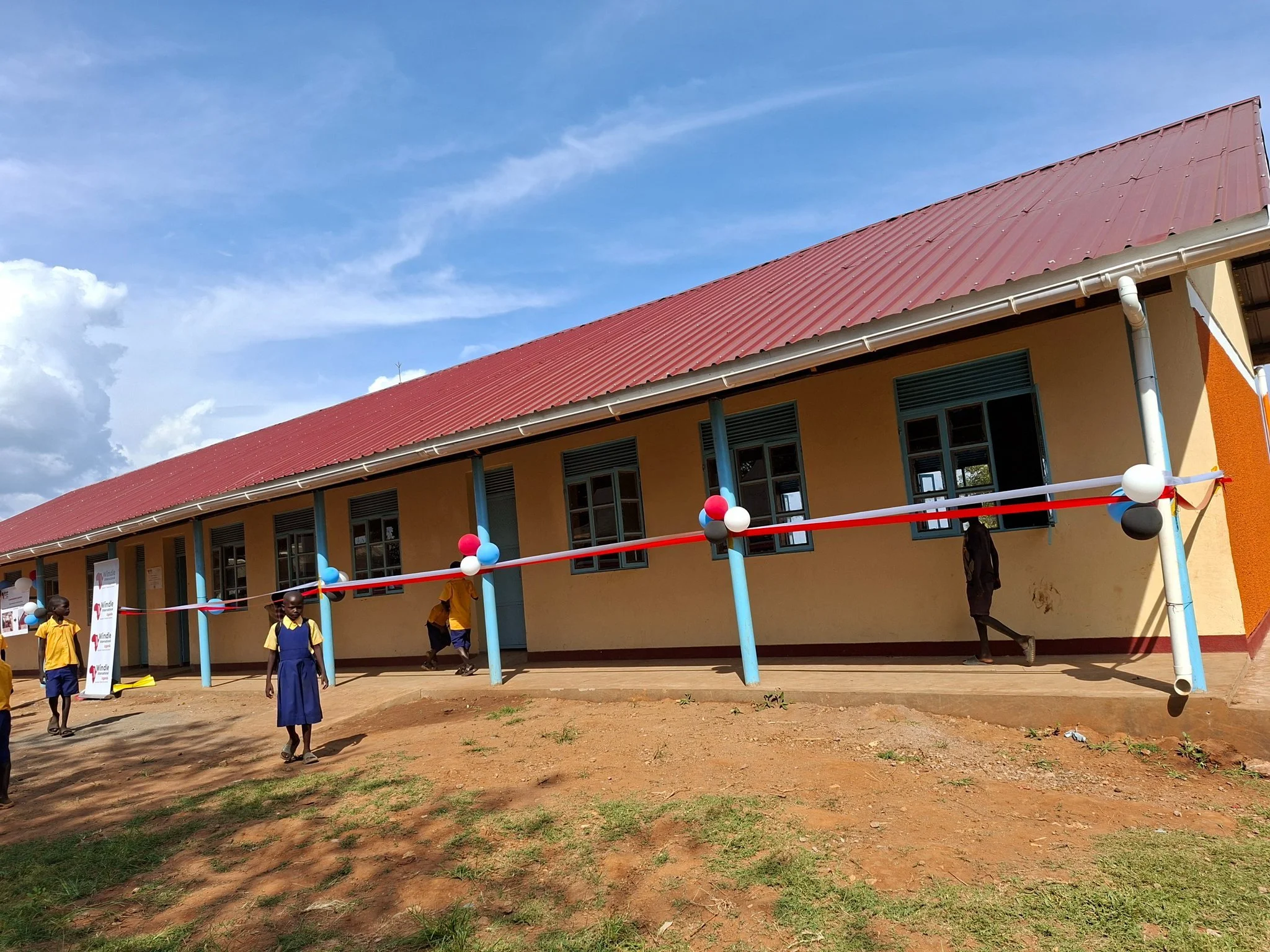
Implemented by WIU with generous support from Jesus Christ Church of the Latter-day Saints, is strengthening access to quality primary education for refugee and host-community children in Yumbe and Obongi Districts. Running for eleven months, the project responds to critical infrastructure gaps that hinder learning, safety, and retention in underserved schools.
SIDE is expanding safe and inclusive learning spaces through the construction of 12 permanent classrooms and 4 gender segregated latrine blocks, significantly improving the learning environment at Rockland Primary School and Our Child Primary School. To promote dignity, wellbeing, and continuity of education for girls, the project provides menstrual hygiene kits and equips learners with skills in reusable sanitary pad production.
In addition, the supply of 216 three seater desks enhances classroom functionality and reducing overcrowding, enabling learners to study in a more organized and supportive setting.
Overall, SIDE is contributing to stronger, safer, and more equitable education systems, ensuring that children from both refugee and host communities have the infrastructure and support they need to learn, thrive, and stay in school.