Promoting Menstrual Dignity and Empowering Young People in Refugee Settlements
Written by Sylivestre Sabiiti of Windle International Uganda
Menstrual health remains essential to the well-being, confidence, and education of adolescent girls, particularly in refugee settlements where access to information, menstrual products, and supportive environments can be limited.
Through its Menstrual Hygiene Management (MHM) initiatives, Windle International Uganda (WIU), in partnership with Wabibi Pads and with support from the Thames Walk Project, continues to empower students, teachers, parents, and communities with the knowledge and practical skills needed to promote menstrual dignity and break stigma surrounding menstruation.
Implemented in Rhino Camp and Kiryandongo Refugee Settlements, the initiative creates safe spaces where young people openly discuss puberty, adolescence, and menstrual health while challenging harmful myths and misconceptions that often affect girls’ education and wellbeing.
Through interactive sessions, participants gain a deeper understanding of the menstrual cycle, menstrual hygiene practices, pain management, emotional well-being, and the importance of proper Water, Sanitation and Hygiene (WASH) facilities in supporting safe and dignified menstrual care.
The initiative also encourages schools and communities to create supportive environments that enable girls to manage menstruation confidently and continue their education without fear, shame, or discrimination.
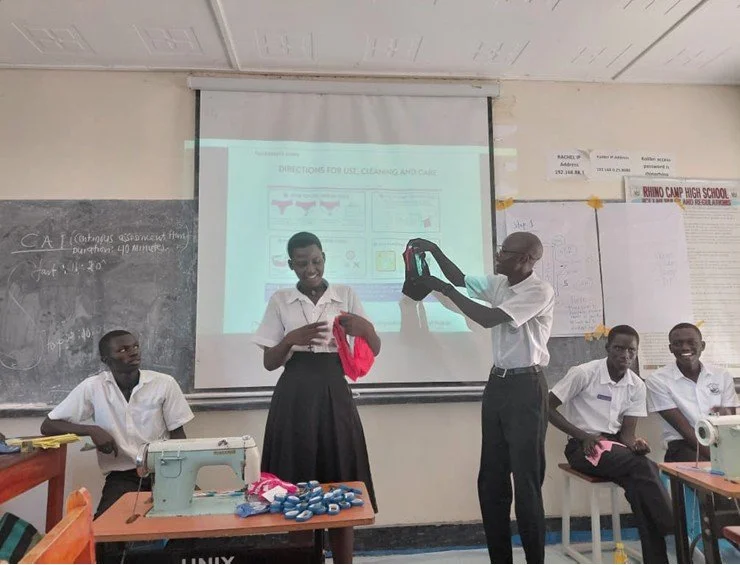
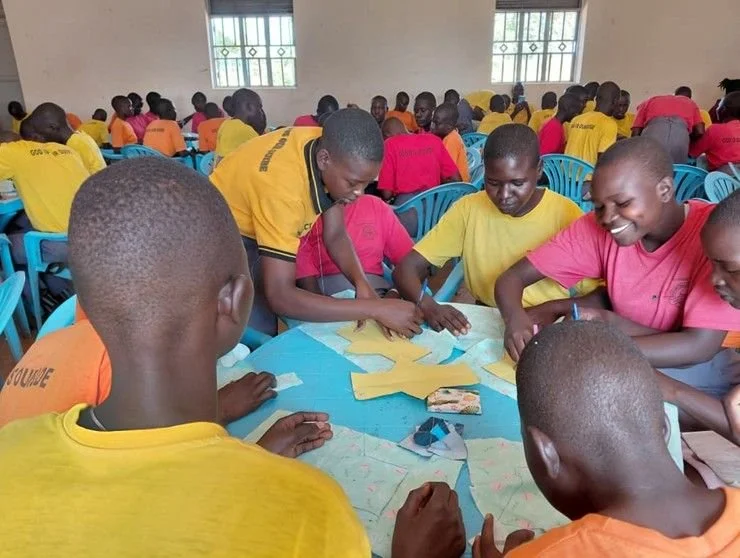
A key component of the program is hands-on training in reusable sanitary pad making. Students, teachers, parents, and community members learn how to produce affordable, durable, reusable pads using locally available materials. This practical skill not only improves access to menstrual products but also promotes sustainability and creates opportunities for income generation within communities.
Recognising that menstrual health is a collective responsibility, the program actively engages boys, teachers, parents, and community leaders in conversations aimed at reducing stigma and promoting positive attitudes toward menstruation. The inclusion of boys has continued to play an important role in fostering understanding, empathy, and support for girls both at school and within communities.
Teachers and school leaders participating in the initiative continue to champion menstrual health awareness through school-based activities and peer support initiatives that encourage girls to stay in school and thrive academically.
Students who take part in the training often express increased confidence and a better understanding of menstruation as a normal biological process. Many participants also demonstrate interest in using reusable pad-making skills to support their communities and improve household livelihoods.
Through these ongoing efforts, Windle International Uganda continues to contribute toward reducing menstrual stigma, supporting girls’ education, and promoting dignity for all.
As the world marks Menstrual Hygiene Day, the initiative highlights the importance of collective action to ensure that every girl and young woman has access to menstrual health information, supportive environments, and the confidence to realise her full potential.